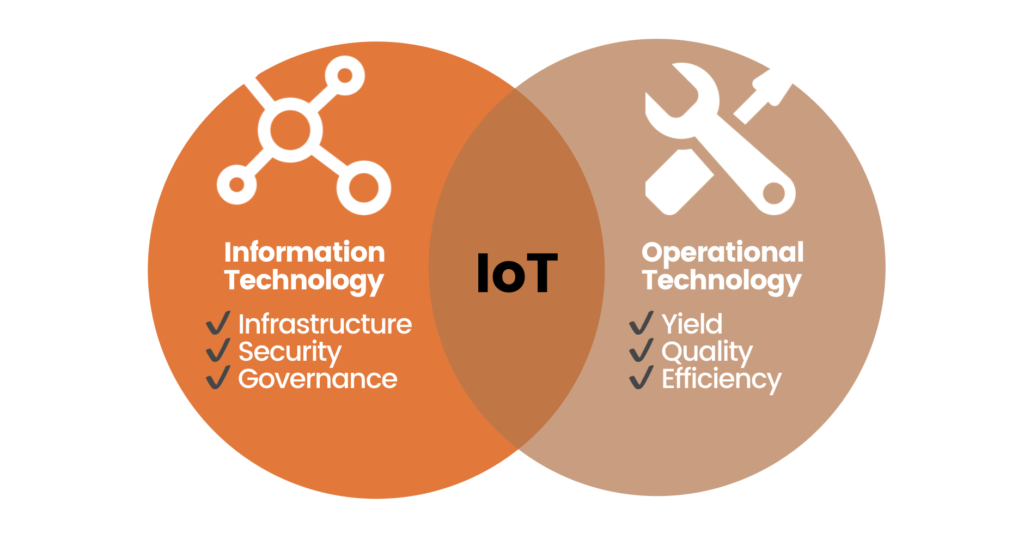
IT/OT convergence refers to the integration of information technology systems, which manage data and digital processes, with operational technology systems that monitor and control physical devices and industrial operations. Traditionally, IT and OT operated in silos, but their convergence enables seamless data flow and unified management across an organization's entire infrastructure.
Key Benefits of IT/OT Convergence
- Enhanced Operational Efficiency: Integrating IT and OT systems streamlines processes, reduces redundancies, and optimizes resource utilization, leading to improved productivity and cost savings.
- Improved Decision-Making: Real-time data from OT systems combined with IT analytics provides actionable insights, facilitating informed and timely decision-making.
- Increased Agility and Flexibility: A unified IT/OT infrastructure allows organizations to quickly adapt to market changes, implement new technologies, and respond to customer demands more effectively.
- Enhanced Security: Consolidating IT and OT security measures ensures comprehensive protection against cyber threats, safeguarding both digital and physical assets.
- Innovation and Competitive Advantage: The synergy between IT and OT fosters innovation, enabling the development of new products, services, and business models that provide a competitive edge.
Implementing IT/OT Convergence
Successfully implementing IT/OT convergence requires a strategic approach:
- Assessment: Evaluate existing IT and OT systems to identify integration opportunities and potential challenges.
- Collaboration: Foster collaboration between IT and OT teams to align objectives, share knowledge, and develop unified processes.
- Technology Integration: Invest in technologies that facilitate seamless integration, such as IoT platforms, data analytics tools, and unified communication systems.
- Security Measures: Implement robust security protocols to protect the converged infrastructure from cyber threats.
- Continuous Improvement: Regularly monitor and optimize the integrated systems to ensure they meet evolving business needs and technological advancements.
Conclusion
Embracing IT/OT convergence is no longer a choice but a necessity for organizations striving to thrive in the digital age. By unifying information and operational technologies, businesses can unlock new levels of efficiency, innovation, and resilience, positioning themselves for sustained success in an increasingly interconnected world.