
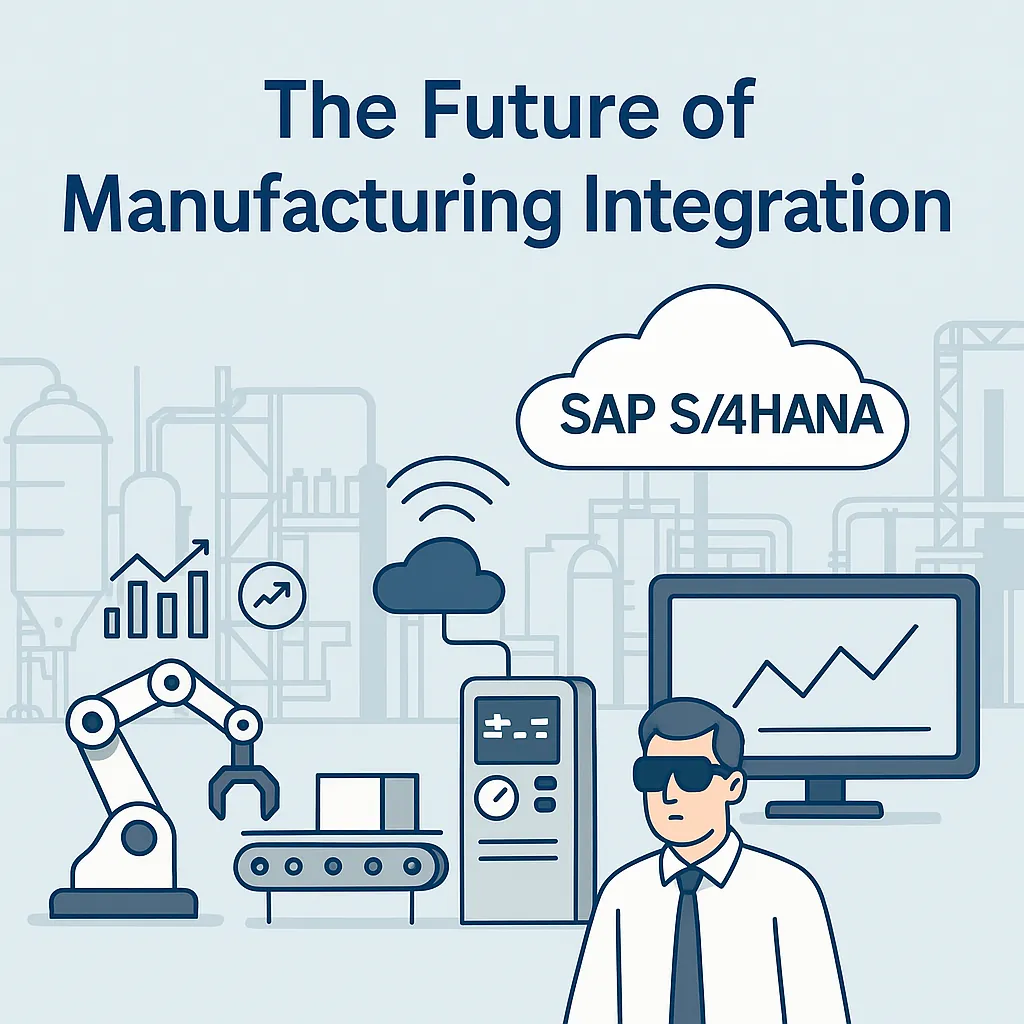
In today's Industry 4.0 landscape, connecting shop floor machines to SAP S/4HANA is not just an option—it's a necessity for staying competitive. This integration enables real-time data flow, automated processes, and unprecedented visibility into your manufacturing operations.
Smart Factory Key Benefits
- Real-time Data Visibility: Monitor production metrics, machine status, and quality parameters in real-time
- Automated Processes: Reduce manual data entry and eliminate human errors
- Improved Efficiency: Optimize production schedules and resource allocation
- Better Decision Making: Make data-driven decisions with comprehensive insights
Integration Steps
- Machine Data Collection: Implement sensors and IoT devices to collect data from shop floor machines
- Data Processing: Set up middleware to process and normalize the collected data
- SAP S/4HANA Integration: Configure SAP S/4HANA to receive and process the shop floor data
- Testing & Validation: Verify data accuracy and system performance
Technical Architecture
The integration architecture consists of multiple layers: shop floor devices, edge computing, cloud platform, and SAP S/4HANA. Each layer plays a crucial role in ensuring reliable data flow and system performance.
Ready to Transform Your Manufacturing?
Contact us to learn more about implementing shop floor to SAP S/4HANA integration in your organization.